From central missions to state-level boards, our affiliations are what let SVNS train at scale — and certify with credibility.
A not-for-profit organisation registered under the Societies Registration Act, 1860, promoted by the Federation of Indian Chambers of Commerce and Industry (FICCI) with financial support from the National Skill Development Corporation (NSDC) — building a robust, vibrant ecosystem for quality education and skill development in the food processing sector.
DDU-GKY skills rural youth from poor households and places them into jobs paying at or above minimum wage. Part of the Ministry of Rural Development's National Rural Livelihood Mission (Aajeevika), it also contributes to the Prime Minister's 'Make in India' campaign.
The flagship scheme of the Ministry of Skill Development & Entrepreneurship (MSDE), enabling large numbers of Indian youth to take industry-relevant skill training toward a better livelihood — including Recognition of Prior Learning (RPL) for those with existing experience.
Formed under the state's Knowledge and Skills Mission — one of seven missions created to drive double-digit growth in Andhra Pradesh — and coordinated by the Department of Skill Development, Entrepreneurship and Innovation (DSDEI) to synergise skilling efforts across departments.
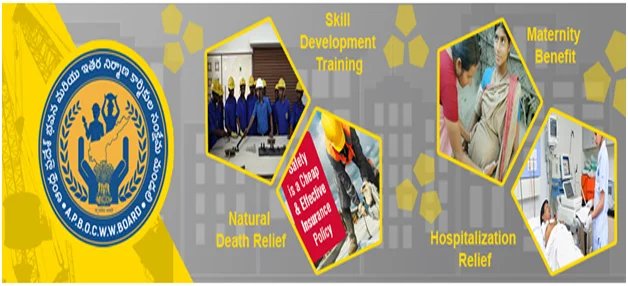
Established under Section 18 of the Building & Other Construction Workers (RE&CS) Act, 1996, primarily to formulate and implement welfare schemes for construction workers in Andhra Pradesh. In effect since 30 April 2007.
Initiated to empower at least one person per household with essential digital literacy skills, aiming to reach 250+ million individuals — helping adults with low technological literacy develop the skills to navigate an increasingly digital world.
A Public-Private Partnership between government and industry, built by the Ministry of Labour & Employment for early school leavers and existing workers — especially in the unorganised sector — developed in close consultation with industry, micro-enterprises, state governments, experts and academia.
Regular programmes nurture youth talent across the aspects of setting up an MSME — run for young people and adults interested in self-employment, often in partnership with ITIs, polytechnics and technical institutions.
A platform giving informal, on-the-job learning equal standing with formal education — assessing an individual's prior learning as a genuine outcome, not merely a process, regardless of how it was gained.